
Ymchwiliad Hillsborough

Lansiwyd ymchwiliad annibynnol gennym i weithrediadau'r heddlu yn dilyn yr argyfwng un mis ar ôl cyhoeddi canfyddiadau Panel Annibynnol Hillsborough (HIP) yn 2012. Daeth HIP i'r casgliad nad oedd unrhyw gefnogwyr Lerpwl yn gyfrifol mewn unrhyw ffordd am yr argyfwng, ac roedd yn cefnogi canfyddiad Ymchwiliad Taylor mai'r prif achos oedd "methiant rheolaeth yr heddlu". Roedd ail ymchwiliad, o'r enw Operation Resolve, yn gyfrifol am archwilio camau gweithredu'r holl sefydliadau a oedd yn rhan o'r argyfwng. Er mwyn sicrhau trosolwg a gwaith craffu annibynnol, mae'r elfennau o ymchwiliad Operation Resolve sy'n ymwneud â'r heddlu wedi cael eu rheoli gennym ni.
Argyfwng Hillsborough - Adroddiad IOPC ac ymchwiliadau Operation Resolve
Cyhoeddwyd ein hadroddiad ar ymchwiliadau IOPC ac Operation Resolve ym mis Rhagfyr 2025. Mae'n archwilio amgylchiadau argyfwng Hillsborough, gan gynnwys materion na chawsant eu hymchwilio o'r blaen, ac mae'n crynhoi canfyddiadau allweddol yr ymchwiliadau ar draws 21 pennod.Cipolwg o'n hymchwiliadau
Roedd cyhoeddi Adroddiad HIP, a chasgliad Cwestau Goldring bod pawb a fu farw wedi cael eu lladd yn anghyfreithlon, yn fomentau allweddol yn yr ymgyrch am gyfiawnder. Yn y diwedd, y rhain oedd yn gyfrifol am ddatgelu'r gwirionedd yr oedd teuluoedd a goroeswyr yr argyfwng wedi ymladd mor galed drosto. Er bod ein cylch gwaith yn wahanol i un HIP, mae canfyddiadau ein hymchwiliadau yn gydnaws â'u casgliadau sy'n ymwneud â gweithrediadau'r heddlu. Rydym wedi casglu ac archwilio llawer iawn o dystiolaeth, sydd wedi caniatáu i ni ychwanegu rhagor o fanylion i gefnogi'r canfyddiadau hynny.
Mae rhagor o wybodaeth ar gael ynghylch pam y gwnaethom ddechrau ein hymchwiliadau.
Ar sail y dystiolaeth a archwiliwyd yn ein hymchwiliadau, rydym yn cytuno y bu methiannau sylfaenol gan Heddlu De Swydd Efrog (SYP) wrth gynllunio ar gyfer y gêm a'i phlismona, yn ogystal ag yn ei ymateb i'r argyfwng wrth iddo ddigwydd. Ar ôl yr argyfwng, rydym wedi canfod tystiolaeth sylweddol nad oedd yr heddlu wedi rhoi digon o flaenoriaeth i'r angen i fod yn agored a thryloyw. Yn hytrach, mabwysiadodd ddull amddiffynnol a cheisiodd reoli'r dystiolaeth a gyflwynwyd i Ymchwiliad Taylor a Heddlu Gorllewin Canolbarth Lloegr i geisio gwyro'r bai oddi wrth yr heddlu.
Fel yn Adroddiad HIP a Chwestau Goldring, ni chanfuwyd unrhyw dystiolaeth i gefnogi'r hyn yr oedd yr heddlu wedi'i ddweud wrth y wasg, Ymchwiliad Taylor na'r ddwy gyfres o gwestau, a oedd yn awgrymu bod ymddygiad y cefnogwyr wedi peri'r argyfwng neu wedi cyfrannu ato mewn unrhyw ffordd.
Gwnaethom hefyd archwilio gweithredoedd Heddlu Gorllewin Canolbarth Lloegr (WMP), a oedd wedi cael y dasg o ymchwilio i'r drychineb ac o gefnogi Ymchwiliad Taylor. Darganfyddom bod yr ymchwiliad hwn yn gwbl annerbyniol ac yn anesboniadwy o gul.
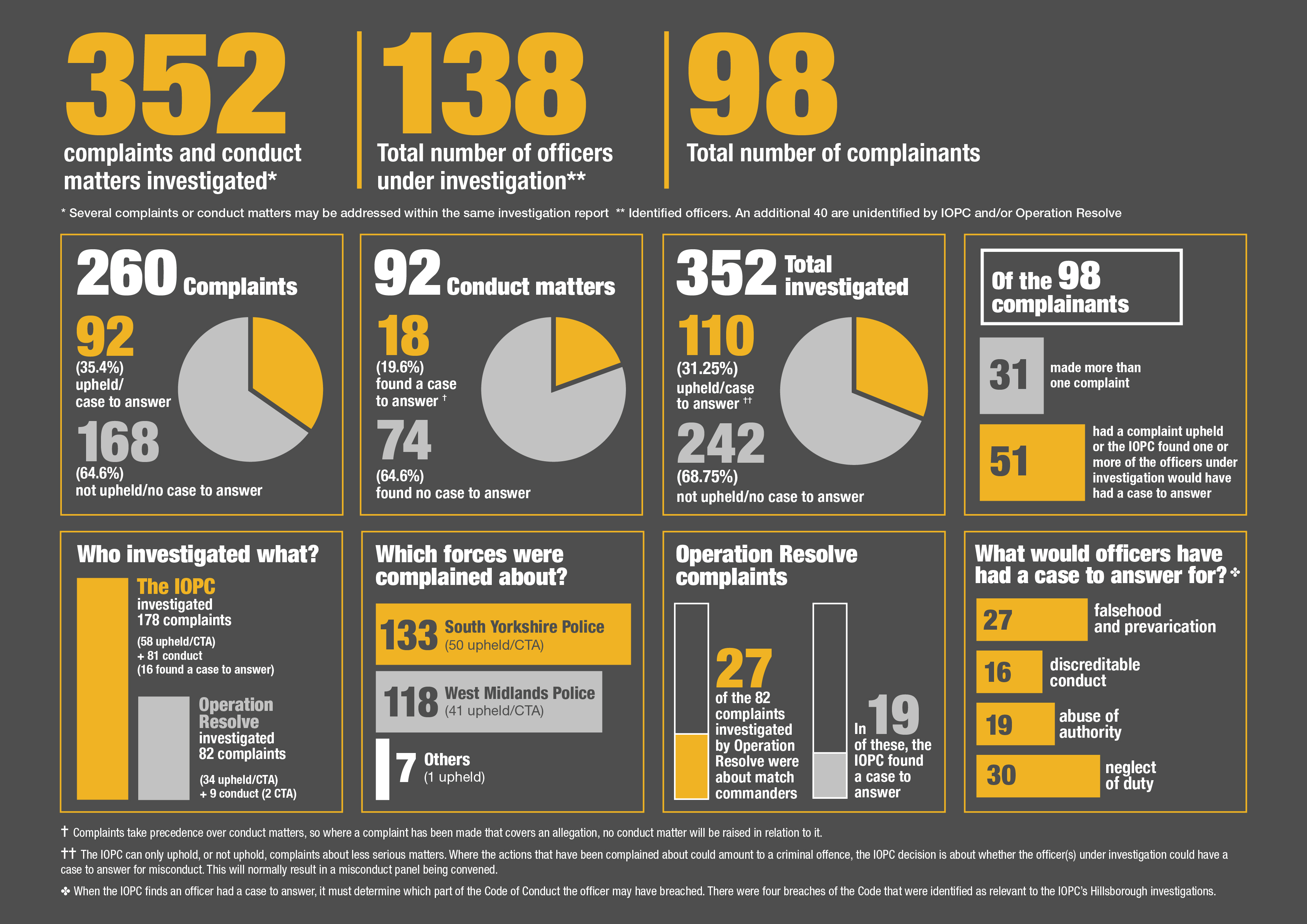
Cwblhawyd ymchwiliad i 352 o gwynion a materion ymddygiad sy'n gysylltiedig â'r argyfwng a'i ganlyniadau. Ymchwiliwyd i bob cwyn a mater ymddygiad yn unol â'n dyletswyddau cyfreithiol, gan ddefnyddio'r holl dystiolaeth a oedd ar gael a gweithredu'r profion cyfreithiol perthnasol a safonau proffesiynol yr heddlu a oedd ar waith ar y pryd.
Dim ond pan oedd y dystiolaeth a oedd ar gael yn bodloni'r trothwyon cyfreithiol y mae'n rhaid i ni eu cymhwyso yr oedd modd i ni gadarnhau cwynion neu roi barn am gamymddygiad . Fodd bynnag, mae ychydig dros hanner yr achwynwyr wedi cael o leiaf un gwyn wedi'i chadarnhau neu, yn ein barn ni, byddai achos i'w ateb am gamymddwyn wedi bod ar gyfer un neu fwy o swyddogion, pe baent wedi parhau yn eu swyddi. Mae ein gwaith wedi'i gyfyngu gan yr heriau o ymchwilio i ddigwyddiadau cyhyd ar ôl iddynt ddigwydd.
Roedd gofyn i ni asesu'r cwynion yn erbyn safonau proffesiynol yr heddlu ar adeg yr argyfwng. Roedd y rhain yn wahanol iawn i'r safonau sydd ar waith heddiw, a gefnogir hefyd gan y Cod Moeseg ar gyfer plismona.
Yn ogystal, mae'r gyfraith a oedd ar waith ar y pryd yn golygu na all swyddogion a adawodd wasanaeth yr heddlu cyn 15 Rhagfyr 2017 wynebu gweithdrefnau disgyblu, waeth beth fo'n canfyddiadau. Yr unig beth a allwn ni ei wneud yw cofnodi barn ynghylch a fyddai swyddog wedi bod ag achos i'w ateb, pe byddai'n parhau i wasanaethu.
Pan ddechreuwyd ein hymchwiliadau yn 2013, roedd cryn dipyn o dystiolaeth wedi'i chadw, ei hadfer a'i hadolygu ac roedd yn bosibl i ni ddefnyddio'r dystiolaeth a gasglwyd gan HIP ac a ddefnyddiwyd yng Nghwestau Goldring ac ychwanegu at y dystiolaeth honno. Fodd bynnag, roedd rhai cofnodion ar goll ac roedd yn anodd casglu tystebau gan dystion gan fod cymaint o amser wedi mynd heibio ers y digwyddiad. Yn anffodus, nid oedd yn bosibl dod o hyd i rai pobl, ac roedd yn well gan rai beidio â siarad â ni, neu nid oeddent yn gallu cofio'r digwyddiadau ar ôl cynifer o flynyddoedd, ac roedd eraill, yn anffodus, wedi marw.
Lle bo'r dystiolaeth ar goll, yn gwrthddweud tystiolaeth arall neu yn anghyflawn mewn ffordd arall, nid oedd yn bosib i ni fodloni'r gofynion cyfreithiol angenrheidiol i gynnal cwynion neu gyfiawnhau barn y byddai unigolyn wedi bod ag achos i'w ateb.
Fel yr adroddiad HIP, darganfuwyd tystiolaeth yn ein hymchwiliadau oedd yn cynorthwyo honiadau bod SYP wedi ceisio dargyfeirio’r bai rhag yr heddlu yn sgìl y drychineb. Ni ddarganfyddom dystiolaeth i gynorthwyo honiadau bod ymddygiad cefnogwyr wedi bod yn ffactor a gyfrannodd i’r digwyddiad. Yn y rhan fwyaf o achosion, nid oeddem yn gallu darganfod bod gan swyddogion achos i’w ateb o ran camymddwyn, oherwydd nid oedd safonau proffesiynol plismona ar y pryd yn cynnwys dyletswydd benodol o ddyletswydd gonestrwydd. Er gwaethaf budd ehangach y cyhoedd i gael atebion am yr hyn a ddigwyddodd, roedd gan SYP yr hawl, o fewn y gyfraith ar y pryd, i gyflwyno ei 'achos gorau' ac i ddewis pa dystiolaeth i’w chyflwyno.
Cafodd y diffyg gonestrwydd a’r ffaith bod ein hymchwiliadau wedi dechrau mor hir ar ôl y drychineb effaith sylweddol ar y penderfyniadau roeddem yn gallu eu gwneud.
Er bod safonau proffesiynol yr heddlu bellach wedi newid, a'u bod bellach yn gwneud hi’n ofynnol i swyddogion heddlu mewn swydd gydweithredu ag ymchwiliadau fel tystion, nid yw’n ofynnol ar hyn o bryd i gyn-swyddogion heddlu sydd wedi ymddeol neu ymddiswyddo gydweithredu ag ymchwiliadau nac ymchwiliadau anstatudol.
Rydym yn cefnogi dyletswydd gonestrwydd statudol newydd cryfach ar gyfer pob gwas cyhoeddus, gan gynnwys yr heddlu, ac rydym yn disgwyl cyhoeddiadau dyfodol y Llywodraeth ar hyn. Credwn y bydd hyn yn cryfhau gallu ein hymchwiliadau i ganfod y gwir.
Fel corff cyhoeddus, mae gennym ddyletswydd statudol i ddewis deunydd ar gyfer diogelu’n barhaol o dan y Ddeddf Cofnodion Cyhoeddus (PRA 1958). I gwrdd â'r ddyletswydd hon, rydym wrthi’n trosglwyddo swm sylweddol o ddeunydd ymchwil newydd a grëwyd gennym fel rhan o'n ymchwiliad Hillsborough i'r Archifau Gwladol (TNA).
Bydd hyn yn cynnwys yr adroddiad hirach ymchwiliadau Hillsborough yr oeddem wedi trefnu i’w gyhoeddi, lle byddwn yn dechrau ei drosglwyddo i'r TNA yn 2026 ar gyfer unrhyw un a hoffai fwy o fanylion am ein hymchwiliadau. Bydd adroddiadau cwynion unigol a materion ymddygiad hefyd yn cael eu trosglwyddo i'r TNA.