

Proposals for changes to the turnstile layout
- Around this same period, there was also discussion between SYP and SWFC about changing the turnstile configuration at the Leppings Lane end. This occurred after SWFC returned to the top division and had larger numbers of away supporters at its games. SYP found it harder to keep these away supporters segregated from the home supporters accessing the Leppings Lane turnstiles. Figure 2F shows the layout at the time, which required barriers to separate opposing supporters.
Image
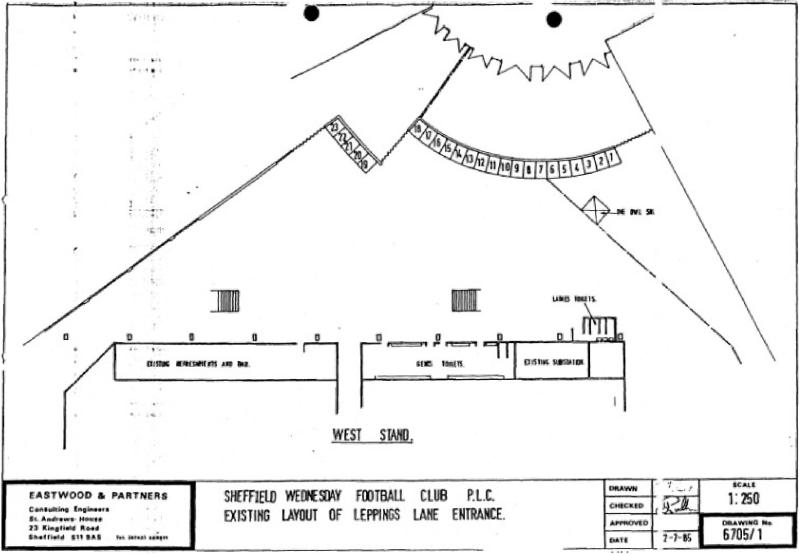
Figure 2F: Drawing of Leppings Lane entrance layout as it was in 1985 (Source: Eastwood & Partners)
- Inspector Clive Calvert (Insp Calvert), who regularly policed the Leppings Lane end in this period, proposed that the whole of the Leppings Lane turnstiles, which were then in a crescent shape, should be demolished and replaced with new ones parallel to and near the rear of the stand. These new turnstiles would then offer direct access to individual pens and to the stands—meaning opposing supporters could be separated earlier. They would also have separate toilets and food and drink facilities, to avoid potential conflict. Senior officers agreed that this proposal should be discussed with SWFC, and the main match commander at the time wrote to the SWFC Secretary, Richard Chester, setting out SYP’s suggestions.
- Mr Chester discussed these with Dr Eastwood, and they agreed an alternative proposal, which would require less work but still offer complete segregation of opposing supporters. It involved adding six new turnstiles but not changing the entire layout.
- This was discussed further at an OWP meeting, and SYP accepted the proposals, subject to a few additional recommendations. The design was revised and by the end of April a clear plan was in place, as shown in figure 2G. This would have resulted in 30 turnstiles rather than the 23 which existed at the time. Each block of turnstiles was also clearly aligned with a specific area of the stadium; for example, on the far left, turnstiles 28 to 30 would have offered access only to the south pen of the West Terrace.
Image
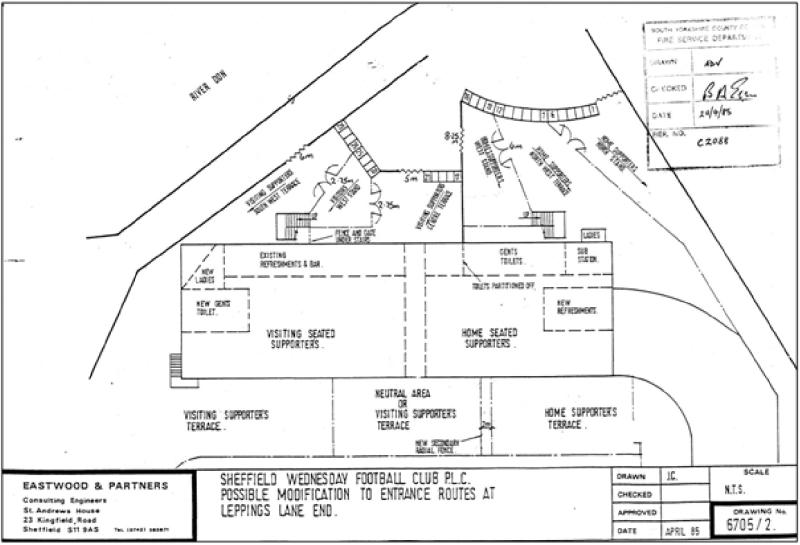
Figure 2G: Drawing of proposed modification to Leppings Lane entrance (Source: Eastwood & Partners)
- In his first report, Mr Cutlack commented that if this plan had been implemented “it is quite possible that the events of 15th April 1989 would not have occurred with the same consequence.” As well as having more turnstiles available, which would have made a crush outside less likely, he noted that the plan would have enabled better use to be made of turnstile count data. Because the banks of turnstiles would have been directly linked to specific areas, the data would have shown the numbers of spectators that had been admitted into each area. When an area reached capacity, the associated turnstiles would simply have been closed.
- SWFC asked Dr Eastwood to provide an estimated cost for the work. At a board meeting on 2 May 1985, SWFC directors rejected the proposal as too expensive. A few days later, the Bradford fire occurred (see paragraph 2.8) in a wooden stand. Even before the investigation was complete, football clubs realised that they would need to fund fire safety improvements; SWFC was no exception.
- There was further discussion between Eastwood & Partners and SWFC, and in August 1985, a revised plan was implemented. This involved no increase to the number of turnstiles but allocated each bank of turnstiles to a specific area of the stadium, to assist with segregation. Under this plan, there were seven turnstiles allocated to the terraces, eight to the North Stand and six to the West Stand.
- Mr Cutlack commented that these alterations “resulted in it being more likely that over-crowding would occur outside the turnstiles because fewer turnstiles were allocated to the West Terrace.” He added: “This was reasonably foreseeable by any competent party.”
- Once again, the changes to the turnstile layout should have resulted in a review of the Safety Certificate; they did not.