

About Hillsborough Stadium
- In 1989, Hillsborough Stadium was one of the largest football grounds in England. It hosted World Cup matches in 1966 and had been used several times during the 1980s for major games such as FA Cup semi-finals, including in 1987 and 1988. The 1988 Semi-Final was between Liverpool and Nottingham Forest; SYP, the FA and SWFC all perceived it to have been a success.
- Like most football stadia in 1989, Hillsborough Stadium had a mix of seated areas (called stands) and standing areas (known as terraces). Tickets for terraces were generally cheaper. At the east end of the ground, known as the Penistone Road end, there was a large terrace named the Spion Kop. This was the ‘home’ end, normally used by SWFC supporters. At the opposite end of the ground, known as the Leppings Lane end, there was a smaller terrace, referred to as the West Terrace, below the West Stand.
Image
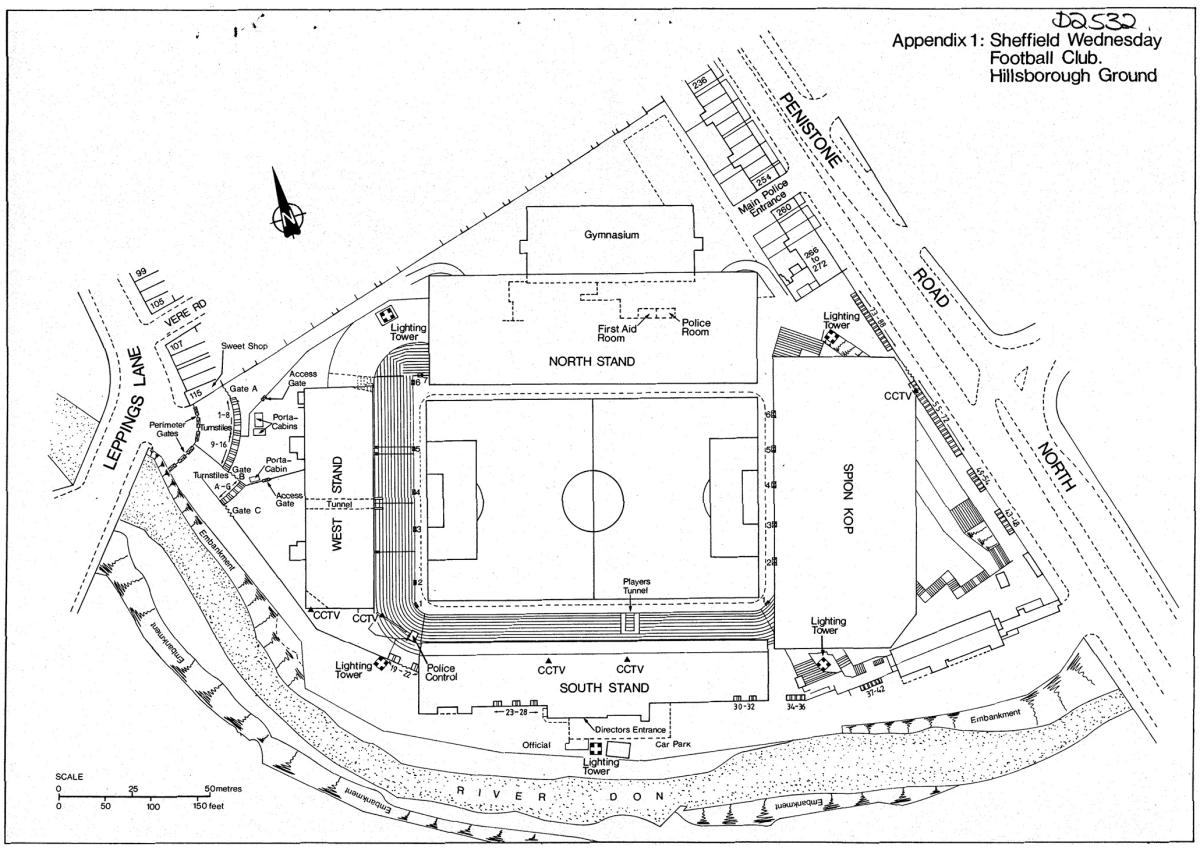
Figure 2A: Map of Hillsborough Stadium as it was in 1989 (Source: SYP Archive)
- Despite its pre-eminent status, there had been various safety incidents at the ground, with supporters experiencing crushing at the Leppings Lane entrance and on the West Terrace. The most severe of these incidents had been at the 1981 FA Cup Semi-Final, where a crush on the West Terrace resulted in numerous injuries and several supporters receiving hospital treatment. However, in the aftermath of the Hillsborough disaster, supporters of different clubs described (including in evidence to the Taylor Inquiry) having experienced uncomfortable overcrowding in the pens of the West Terrace on other occasions, including at both the 1987 and 1988 FA Cup Semi-Finals.
- Together, these incidents raise questions about the suitability of Hillsborough Stadium to host major matches and whether it met the safety standards of the day.
- Operation Resolve investigated these issues, with a particular focus on what role the police played in any discussions and decisions about the stadium layout.