

Re-examining the opening of the exit gates
- Exit gates, as the name suggests, are primarily used as a means of exit from the stadium at the end of the game or in the event of an emergency. They are wide gates designed to allow people to go through unimpeded (in contrast to turnstiles at the entrance, which control access to the ground). They are not normally used to allow people into the ground.
- As shown in figure 4A, there were three exit gates at the Leppings Lane end.
- Gate A was closest to the turnstiles allocated to supporters with tickets to the North Stand.
- Gate B was the middle gate of three exit gates at the Leppings Lane end of the ground. It was to the left of the area that gave access to turnstiles A to G. This exit gate was used to allow supporters from the West Terrace and the West Stand to exit the stadium.
- Gate C was at the far southern end, close to the river. It opened onto the service road at the side of the stadium and was slightly hidden from view behind the turnstiles allocated for supporters with standing tickets (see figure 4I).
Image
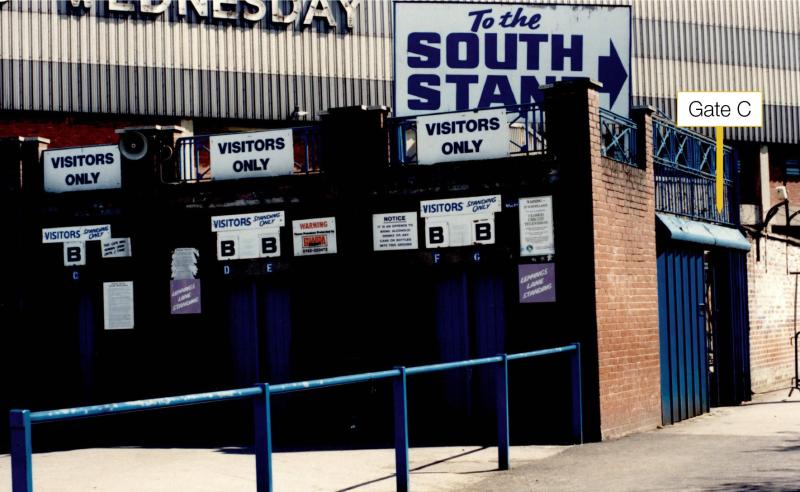
Figure 4I: Photo of Gate C and surrounding area at the Leppings Lane end (Source: Provided by Yorkshire Ambulance Service, Sheffield Archives)
- From the earliest stages after the disaster, the opening of Gate C was identified as a pivotal moment. When it was opened, large numbers of supporters came through it at the same time, in an uncontrolled flow. Evidence shows that the majority headed towards the central tunnel, which was the most obvious route to the terraces. The word above it reads “STANDING”. The only other sign to an alternative route to the terraces was not readily visible.
Image
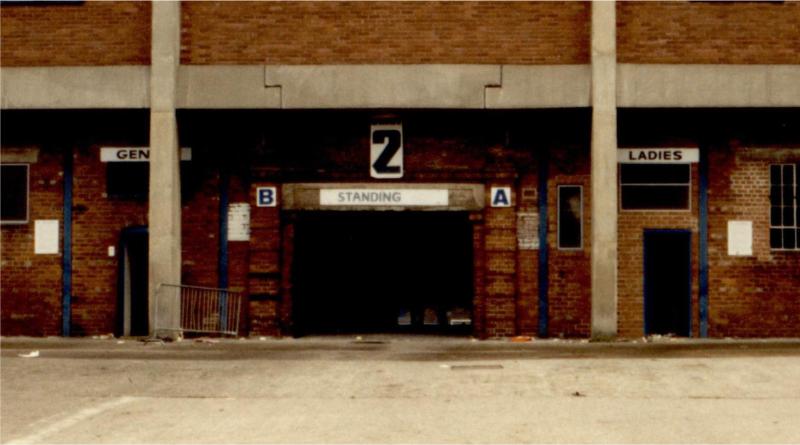
Figure 4J: Photo of the inner concourse of the Leppings Lane end, as viewed from Gate C, in 1989 (Source: WMP)
- The central tunnel led directly into Pens 3 and 4 of the West Terrace, which is where the fatal crushing occurred, following the arrival of a large number of people into those pens at the same time. These pens were already full, or near full, but no action was taken to stop more supporters going into them. In the Taylor Interim Report, the fact that no action was taken to cut off access to the centre pens following the opening of Gate C was described as “a blunder of the first magnitude”.
- Since the disaster, it has been established that there were three different openings of Gate C which led to supporters coming into the ground. Gates A and B were also opened to allow supporters in. Each of these openings is considered in the following sections.