

The build-up of the crowd
- By about 2.15pm, officers in the PCB were discussing the disparity between how full the areas allocated to Nottingham Forest supporters were, and the comparative emptiness of the areas allocated to Liverpool supporters. This can be seen in figure 4C, which offered a similar view to that which would have been available through the PCB window.
Image
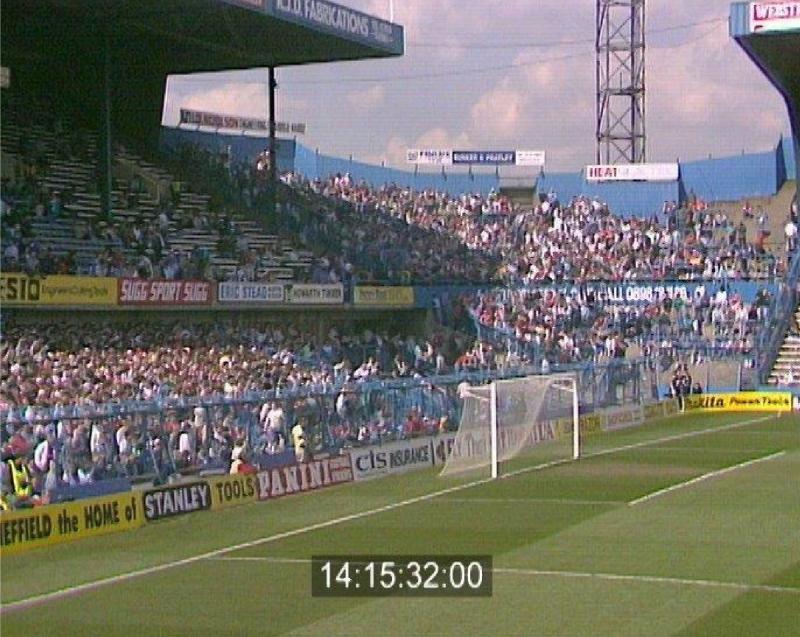
Figure 4C: View of the West Stand, West Terrace and North West Terrace, 14:15:32 (Source: BBC)
- While the centre pens of the West Terrace (shown in the foreground) appear quite full, the pen beyond the goal is comparatively empty, as is the West Stand above. A lot of space is also visible in the North West Terrace in the corner of the stadium.
- By this time, the crowd outside was building, as can be clearly seen in the CCTV image at figure 4D, from 14:17:10.
Image
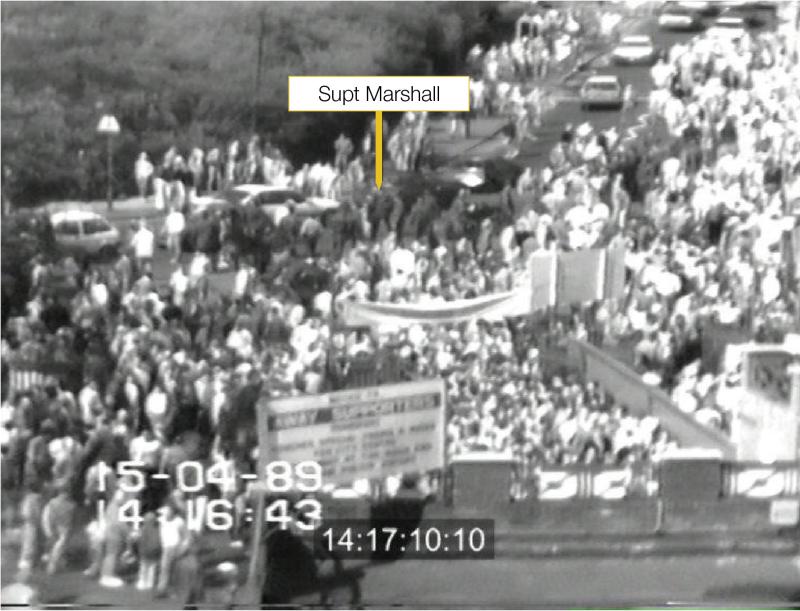
Figure 4D: View of the area outside the outer perimeter gates, as seen from the West Stand, 14:17:10 (Source: SYP CCTV)
- Various factors had contributed to this build-up, including the arrival of a special train at Wadsley Bridge station just after 2pm, from which mounted police escorted between 350 and 500 supporters to the stadium. Photographs of the supporters being escorted from the train show them walking calmly and there are no signs of supporters with alcohol.
- In addition, at 2.10pm, PS Miller decided to close the Horse and Jockey pub and direct supporters towards the stadium. He suggested there were about 400 supporters there and alerted the PCB to his actions. As with the supporters on the special train, there were no reports of anyone causing problems.
- Together with supporters arriving from other locations, this meant that up to 1,000 more people converged on the entrance area at around the same time.
- Accounts vary as to what the situation was like at the turnstiles around this time. Some officers and spectators have said that up to 2.15pm, there were neat queues, with supporters laughing and joking. Others recall that from 2pm there was some pushing and shoving at the turnstiles; one supporter said that when he arrived at 2.10pm “There was just a sea of people at the turnstiles” and another commented that by 2.15pm there were no distinct queues and police officers could no longer organise the crowd.
- In his 1989 account, Detective Superintendent Graham McKay (D Supt McKay), who was the senior detective on duty at the stadium at that stage, recalled that at about 2.15pm, he went to the service road to the side of the Leppings Lane turnstiles. He saw that officers were having great difficulty controlling the crowd and it was apparent that the turnstiles were not coping efficiently with the increasing number of supporters.
- Supt Marshall was outside the stadium, on Leppings Lane. In an account from 1989, he said that by 2.15pm, Leppings Lane was full of supporters moving in both directions. He estimated there were between 6,000 and 8,000 supporters in the area. He said they were spilling off the footpaths onto the road and disrupting traffic flow. At 2.17pm, he radioed the PCB asking for Leppings Lane to be closed to traffic. A serial of officers was deployed to do this at one end, but the PCB was unable to contact the serial at the other end of the street. The road was not closed immediately and at about 2.22pm, Supt Marshall sent a further message reporting that there was still traffic coming along the road and asking again for it to be closed.
- Both Ch Supt Duckenfield and Supt Murray commented in their 1989 accounts that, having seen the CCTV footage, they did not think closing the road looked necessary.
- In describing the situation at around 2.20pm, the accounts of supporters are largely consistent. With just a few exceptions, they paint a picture of no discernible queues and a mass of people at the entrance. Those closer to the turnstiles referred to pressure building from behind and being unable to turn around or get out of the crowd. This pressure then increased further.
- In their original statements, and again in statements to Operation Resolve, some supporters compared the situation at the 1989 Semi-Final with their experiences the previous year, where they recalled that the police operation seemed more organised, with officers checking whether supporters had tickets before they got close to the entrance area. There had been no such crowd pressure at that game.