

The visit of the Prime Minister
- Mrs Thatcher travelled to Sheffield by helicopter on the morning of 6 April. The agenda for her visit included a briefing from SYP, then visits to the stadium and the hospitals to thank staff and speak to the injured and their families. She arrived in Sheffield at around 11.45am, accompanied by the then Home Secretary, Douglas Hurd, and left at around 4.45pm.
- The HIP Report contains a suggestion that when briefing the Home Secretary and Prime Minister, SYP attempted to blame supporters for the tragedy. This suggestion appears to be based on two factors:
- the HIP’s review of an early draft of the Home Secretary's statement to Parliament about the disaster
- comments made by Sir Bernard Ingham, the Prime Minister’s Press Secretary, in the aftermath of the disaster
- Any information given by senior SYP officers would be expected to form an important part of the Home Secretary and Prime Minister’s understanding of the disaster. The IOPC sought to investigate whether the briefing given by SYP to the Home Secretary and Prime Minister on the day after the tragedy contained any inaccurate or inappropriate information.
- The early draft of the Home Secretary’s statement included the words: “The Chief Constable of South Yorkshire told us that shortly after the start of the match there was a surge of spectators on the Leppings Lane terrace which crushed many at the front against the safety barrier.” It also referred to the behaviour of Liverpool supporters outside the stadium, saying that police officers had needed to use “loudhailers to urge the crowd to be patient”; as the crowd increased, “some supporters started to climb the walls and turnstiles.” While the draft statement indicated that they did so to escape the crowd pressure outside the stadium, this could be read as a criticism of supporter behaviour.
- In the final version of the Home Secretary’s statement, the reference to being given information by the Chief Constable was removed, and the description of a surge crushing spectators against the barrier was phrased as a factual explanation of what occurred. The comments about the use of loudhailers and supporters climbing walls were retained.
- The IOPC has identified that there are strong similarities between the Home Office Statement and a written update sent from CC Wright’s office to the Home Office at 9.30am on 16 April 1989—before Mrs Thatcher’s arrival in Sheffield. This appears to have been an initial briefing to duty officials at the Home Office.
- It is understandable that SYP provided an update to officials and that the Home Office used this as the basis for drafting a statement. The Home Office, in both its early and final versions, added more information; it also expressed sympathy for those affected and thanked those who helped in the rescue attempt. These details were not in SYP’s written update.
- As Press Secretary to Mrs Thatcher, Sir Bernard accompanied her when she visited Sheffield the day after the disaster. On multiple occasions, he has stated that while there, the police told them that the disaster had been caused by the actions of “tanked-up” supporters. For example, in a letter sent in 1996 to a man whose friend had died in the disaster, Sir Bernard wrote: “I believe that there would have been no Hillsborough disaster if tanked-up yobs had not turned up in very large numbers to try to force their way into the ground. I visited Hillsborough the day after the disaster and I know what I learned then.”
- In a 2014 statement to the IOPC, he said: “We were told that a huge crowd had assembled there late, some of whom I was told were ‘tanked up’.” He did not specify who told him this.
- There are no minutes available of the briefing Mrs Thatcher received from officers. Several of those involved in the meeting with Mrs Thatcher had died before the IOPC investigation began, including CC Wright and Mrs Thatcher herself.
- However, the evidence from others present offers a very different perspective to Sir Bernard’s. Mr Hurd stated to the IOPC: “There was no hint at the time of what became The Sun story ‘it was all the fault of the Liverpool fans.’ I didn’t know about it until I saw the story – I had never heard that story.” He added: “On the day of our visit I don’t think that I heard anything about how the fans behaved from anyone on the day of the disaster.”
- Dominic Morris was the Private Secretary for Home Affairs at the time and also accompanied Mrs Thatcher throughout the visit. He told the IOPC he had no recollection of officers making any reference to alcohol or the behaviour of supporters.
- Photographs show Mrs Thatcher visiting the Leppings Lane terraces. Three uniformed senior officers can be seen with her, including Ch Supt Duckenfield (with back to camera) and Ch Supt Mole (next to Mrs Thatcher). CC Wright was known to be present and may be the obscured officer, standing to Mrs Thatcher's right.
Image
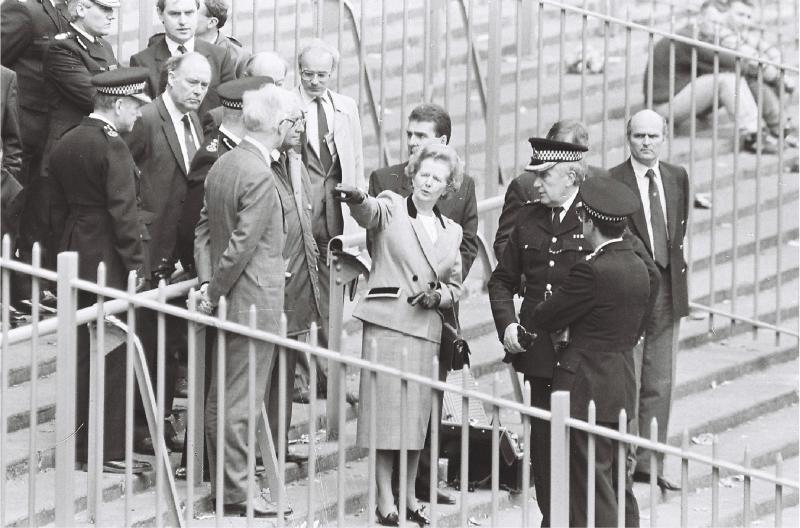
Figure 8A: Mrs Thatcher’s visit to the terraces, Sunday 16 April 1989 (Source: NewsCorp/The Times Group)
- A number of journalists were also present during Mrs Thatcher’s visit, and some toured the ground with her. Investigators asked them for their recollections; none remembered any comments from the police about supporters. The IOPC also asked officers who were, or may have been, present if they could recall what had been said; none could.
- All available AV footage has been scrutinised. IOPC investigators also examined a range of papers and diaries related to the period. These included:
- Mrs Thatcher’s diaries
- Lord Hurd’s diary, which he handed to investigators when interviewed
- Sir Bernard Ingham’s papers, which are held by the Churchill Archive Centre in Cambridge as part of its Thatcher Archive
- Despite these wide-ranging efforts, it has not been possible to confirm the details of the discussions between SYP and Mrs Thatcher and her advisers on the day after the disaster.