
The situation in the pens
- The difference in fullness between the areas allocated to Nottingham Forest supporters and Liverpool supporters had been noted early on. However, as kick-off approached, there was a further visible disparity in fullness at the Leppings Lane end, between the centre pens—Pen 3 and 4—of the West Terrace and the side pens.
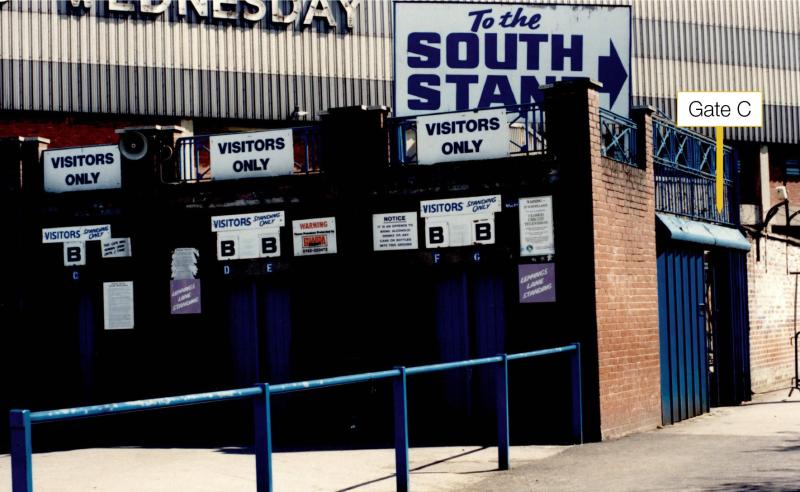
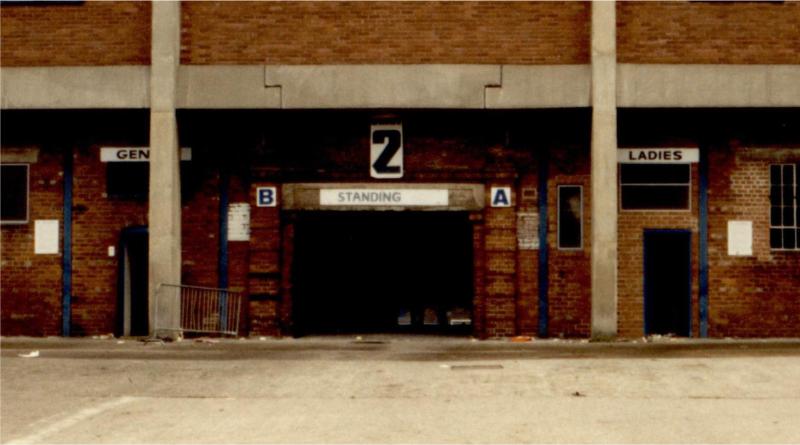
- On the day, supporters with tickets for the West Terrace could choose which pen they went to and—at least in theory—could move between pens as part of SYP’s ‘find your own level’ approach to the distribution of spectators. The centre pens were accessed via the tunnel under the West Stand. The entrances to the side pens were at either end of the West Stand and not immediately visible or clearly signposted on entry.
Image
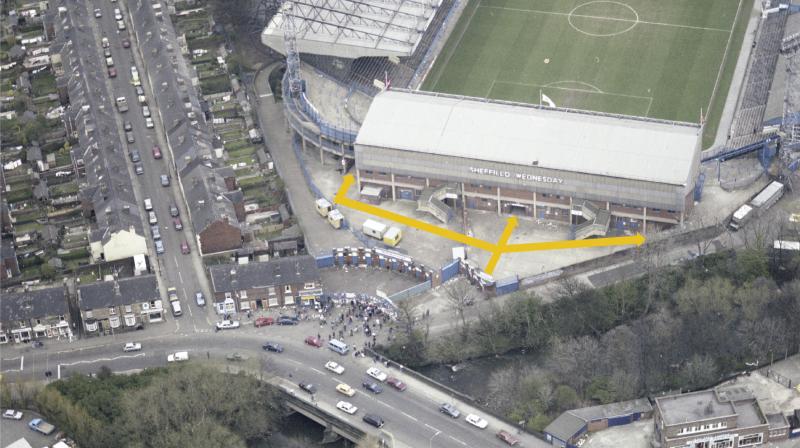
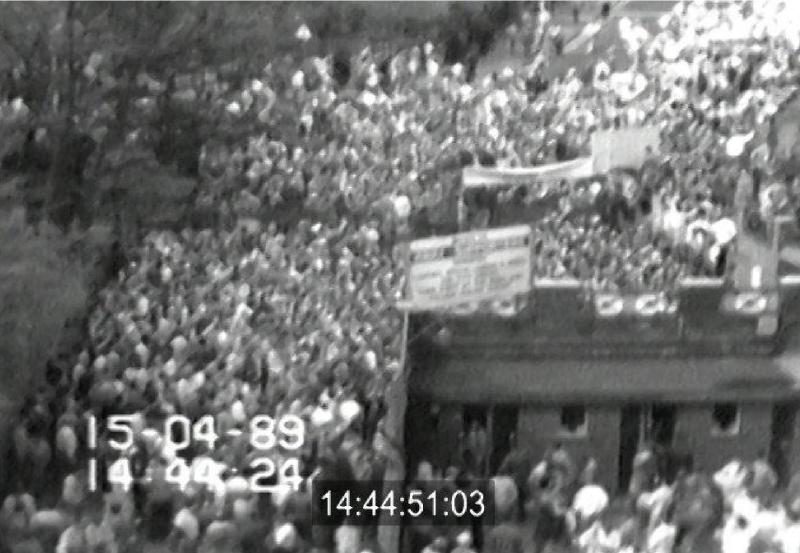
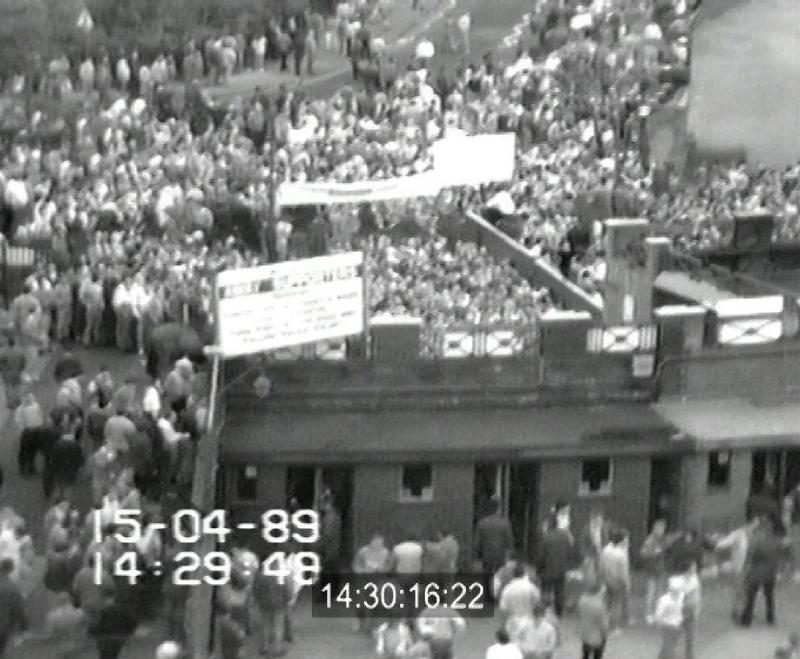
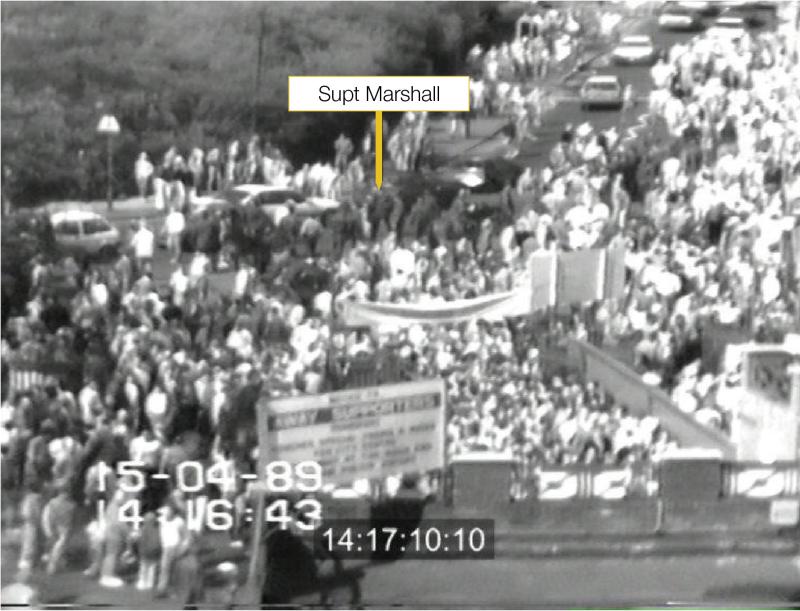
Figure 4K: Aerial photo of Leppings Lane end, with arrows showing spectator entry routes to the West Terrace and North West Terrace on the day of the disaster (Source: Operation Resolve, based on photograph taken by Michael Warburton Lee, SYP)
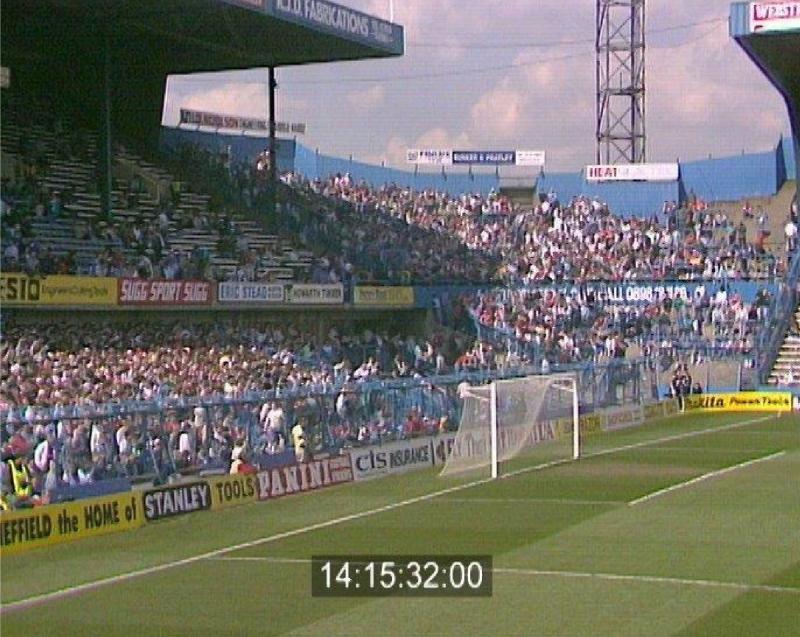
- There was an expectation that the centre pens would fill first, as normal, and on the day of the disaster, this proved to be the case. As shown in figure 4C, as early as 2.15pm there was a visible difference in fullness between the centre pens and the side pens.
- Officers nearby recalled there being a good atmosphere in the centre pens, with a beach ball being thrown around. Though there were some instances of supporters climbing over the fences between pens, and in one case climbing to the West Stand above, these were not as a result of supporters seeking to escape a crush.
Image
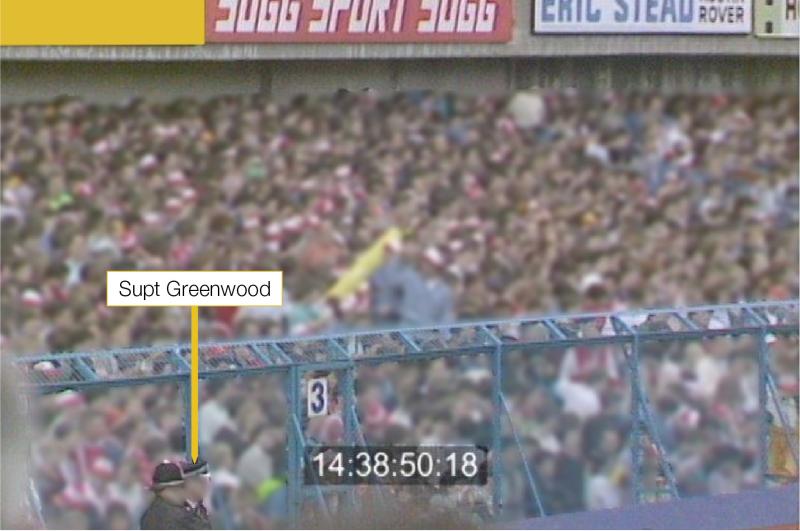
Figure 4L: View of Pen 3, 14:38:50 (Source: BBC)
- At 14:38:50, Supt Greenwood was standing in front of the centre pens, talking to an officer on duty there. As figure 4L shows, there were no obvious signs of crushing or discomfort at this stage, but there was little room to move in the centre pens.
- However, some supporters’ accounts indicate that by about 2.40pm, the situation in Pens 3 and 4 was becoming uncomfortable. One sought to leave Pen 3 but was unable to; others described using crush barriers for protection against crowd surges from behind.
- Officers stationed on the perimeter track in front of the West Terrace have broadly shared the view that up to at least 2.40pm–2.45pm, there were no discernible problems in any of the pens.
- While the officers on the track were not concerned, BBC football commentator John Motson had a different opinion. In a statement dated 4 May 1989, he said that from his position on the camera gantry on the roof of the South Stand, he had an excellent view of the inside of the ground. He said that at 2.45pm, he was rehearsing the sequence of camera shots and commentary, and that during one of the rehearsals he stopped speaking. He explained: “The reason I stopped was that part of my script talked about ‘an all ticket capacity crowd’ but I suddenly spotted that two end sections of the Leppings Lane terrace were only just over half full. There was plenty of room in these two wing sections which I have since gathered are numbered 1, 2, 5, 6 and 7.”
- He said that, in contrast, the two centre sections were fully occupied and gave the usual impression of a solid, heaving mass of supporters who were chanting, singing and clapping. He recalled he was surprised that there was so much space in the wings of the terrace and thought that it looked as though two thousand ticket holders had not turned up.
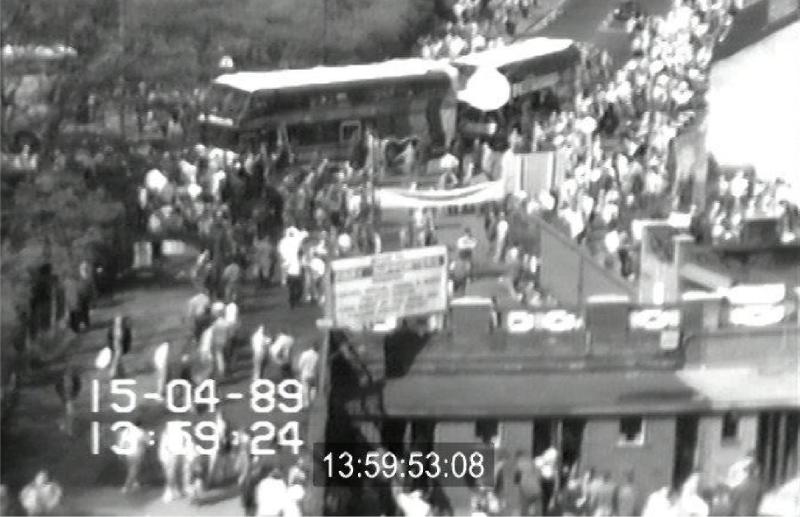
- Neither he, nor the officers on the track, were aware of what was happening outside the stadium at the same time. It is possible that, if those inside the stadium had known of the crush outside, they may have viewed the imbalance between the fullness of the pens differently.
- As Operation Resolve’s analysis of the Operational Orders has made clear, none of the officers on duty at the Leppings Lane end had a documented responsibility to monitor the capacity and safety of the pens. While they could have seen the situation in front of them, they were not asked to evaluate it or consider it in context.
- Senior officers, including Supt Greenwood and Ch Insp Creaser, have indicated in their accounts to different investigations that this duty was not documented because it was effectively a commonsense expectation for experienced officers. They have argued that, if fellow officers saw that any of the pens were becoming full, they could take action.
- Ch Supt Duckenfield told the Taylor Inquiry and the Goldring Inquests that he believed responsibility for monitoring the pens lay with SWFC stewards. He said, correctly, that this was in line with the Green Guide, which recommended that stewards were responsible for the safe dispersal of spectators on the terraces and for preventing overcrowding. However, SWFC’s ‘Instructions to match day staff’ told stewards not to become involved in crowd control, as this was the responsibility of the police. At the Goldring Inquests, Ch Supt Duckenfield said he had never seen this document; Operation Resolve has, however, established that it was shared with the police planning team.
- In his evidence to the Goldring Inquests, Ch Supt Duckenfield noted that officers from Serial 1, on the perimeter track, and Serial 13, in the West Stand above the West Terrace, had a role to play in monitoring capacity.
- Inspector David Bullas (Insp Bullas) was in charge of Serial 13. He was asked at the Taylor Inquiry if his officers had been instructed to keep a particular eye on the size of the crowd in the terrace below. He replied: “There is no particular instruction, but it is common sense that one does look down, looking down at the crowd all the time if you are stood at the front, and obviously you will be monitoring the people in the stand with regard to exits and emergency exits, etc.”
- Police Sergeant Paul Burman was the Serial 13 sergeant. In a statement to Operation Resolve in 2013, he explained that he and members of his serial regularly worked in the West Stand and listed their duties. Monitoring the crowd was not included in the list he gave. However, at the Goldring Inquests, he said that he would expect the officers under his command to do that, and to bring any matters of concern to his attention.
- Insp Darling was in charge of Serial 1. He told the Taylor Inquiry: “It is a general duty of ours to monitor the crowd and had anything happened or any sort of circumstances occurred within the crowd which needed our attention, then we would have taken the necessary action.”
- Police Constable Peter Smith (PC Smith) was regularly stationed in front of Pen 3. In his original account and evidence to the Taylor Inquiry, he said that monitoring the behaviour of supporters was part of his duties. He was asked by Counsel to the Inquiry if that extended to monitoring overcrowding. He replied: “That is something that is permanently monitored, sir. You would be looking for people in difficulty.”
- Inspector Harry White (Insp White) was in charge of Serials 14 and 15, whose duties included maintaining order on the West Terrace. He had considerable experience policing matches at Hillsborough Stadium. Following the disaster, he was asked to provide a report covering, among other things, “what instructions I have received in the past about, and what my understanding is as to whose responsibility it is to check and monitor the capacity each pen holds at any time before and during the match and their rate of fill.”
- He wrote that he had “never received any specific instructions as to monitoring content and rate of fill of the pens or stands”. He commented that due to the location of the PCB he had “always exercised the common sense approach that the ground commander in the control box could assess best from this vantage point capacity and rate of fill.” He added that if he thought the terraces were full, he would have alerted the PCB.
- The consistent impression from their own accounts and other evidence is that officers on duty at the Leppings Lane end would keep an eye out for overcrowding, but had neither any specific instruction to do so, nor any clear understanding of what they might do if the pens became overcrowded.
- At the Taylor Inquiry, Ch Supt Duckenfield stated that, at around 2.30pm, he had noticed the uneven distribution of supporters in the pens and asked for a public address message to be relayed for supporters to move forward and spread along the West Terrace. Counsel to the Inquiry asked him whether he had considered sending officers to encourage supporters to move. He said this did not cross his mind but indicated that officers could have taken this action of their own volition. Counsel pointed out the problem with this assumption: the officers with responsibility for maintaining order on the West Terrace—Serials 14 and 15—were deployed on the inner concourse at this stage, so would not have been aware of the situation in the pens, unless they were specifically informed.
- The evidence indicates that Ch Supt Duckenfield also did not consider the implications of the uneven distribution: that it meant there were many more Liverpool supporters still to arrive.
- At this stage, officers inside the stadium had some knowledge of the situation in the pens—or at least, could see that the centre pens were approaching being full—but those outside had no idea that there were still gaps. By contrast, those outside were responding to an escalating crush that those inside the stadium had no knowledge of. The officers who could see both situations were those in the PCB, but they did not communicate this to either group of officers.