

INTERVIEW: IOPC Youth Panel quizzes children’s policing lead
One of the country’s most senior officers has said policing needs to do more to understand the views and experiences of children and young people, and provide platforms for them to help influence national and local policy.
Chief Constable Catherine Roper – the National Police Chiefs’ Council (NPCC) lead for children and young persons – said policing should learn from young people’s concerns and use their insight to improve.
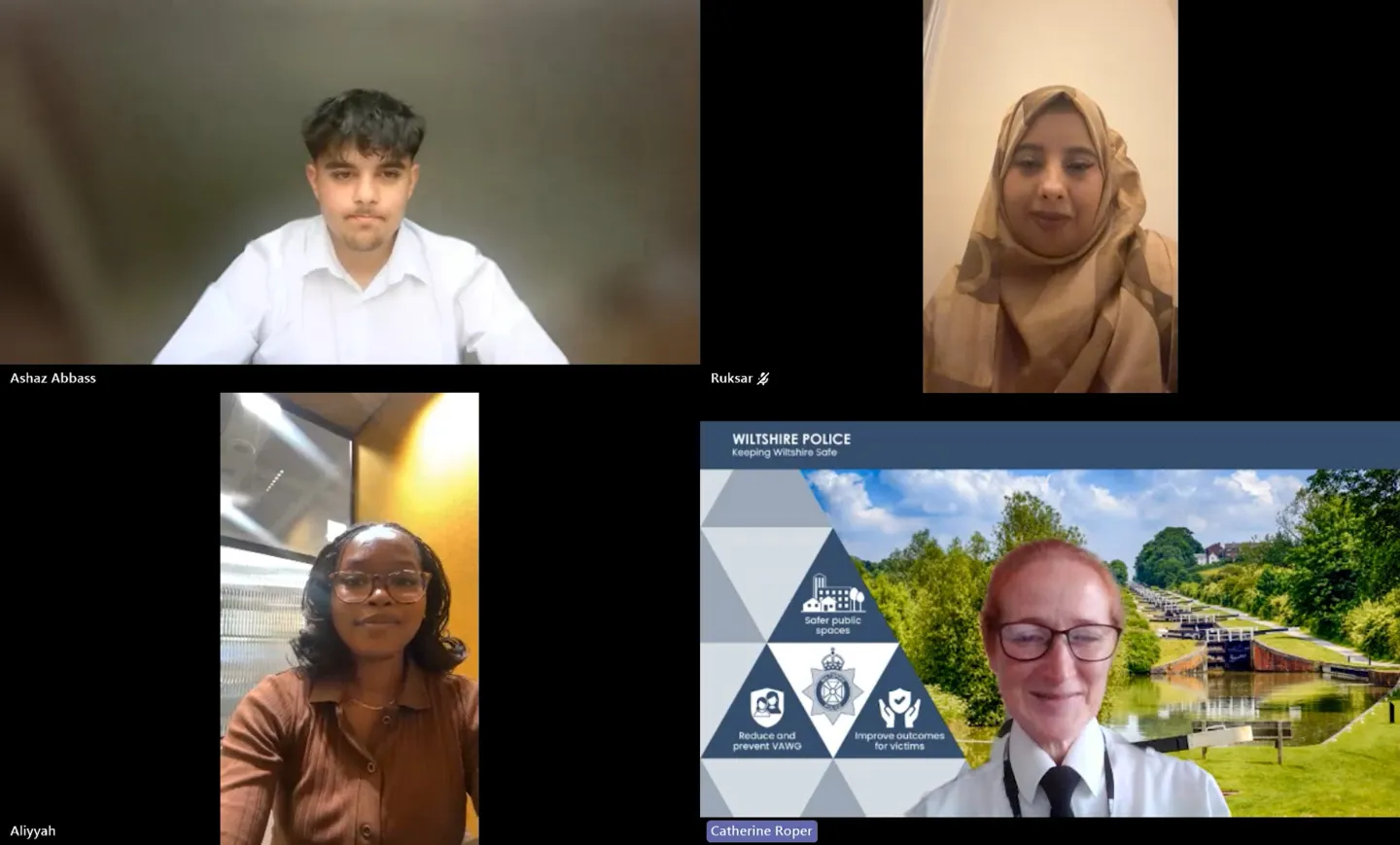
CC Roper made the comments in an interview with members of the Independent Office for Police Conduct’s (IOPC) Youth Panel in which she was pressed on subjects including stop and search, and the risk of ‘adultifying’ children.
“We need to listen to children and young people and help them raise any concerns,” said CC Roper. “I don’t think previously policing has created a safe pathway for that to happen.
“Every Home Office police force has signed up to my children and young persons strategy and its child-centred approach. They need to consider what it means for training, for stop and search, and to track how they’re improving engagement with young people and be truly child centred.
“I want policing to adopt practical, tactical ways to engage with young people, making sure we hear their opinions, with their best interests and fairness at the heart of everything we do.
“This might include creating youth scrutiny panels or youth feedback opportunities to bring young people into our training processes. In turn, I can feed into government and other policy development on how best we can support children.”
The importance of considering young people’s views to develop police practice is a core theme in the Youth Panel’s 2030 Manifesto for Change.
One of their 10 recommendations – a call for police to clearly communicate to young people that they have the right to complain or give feedback following all interactions with police – has been supported and acted on by police custody leads.
Panel members Aliyyah (23), Ruksar (24) and 17-year-old Ashaz, from London, Leeds and Rotherham respectively, also quizzed CC Roper on children exploited into crime and if they should be treated as child victims and not suspects.
“This is a great question, a complex question,” she said. “Children must be recognised as children, and I am determined to anchor that into policing.
“There will be occasions where a child has been exploited into crime. They could be a victim, but also a suspect. Of course, we must uphold the law and keep people safe. The challenge is navigating this difficult situation.
“If a child has been arrested and taken into custody, perhaps for the first time, it’ll be an incredibly stressful moment. It’ll be confusing, they may not understand some of the questions being asked. They’ll be asked if they want legal advice; they may not know why they’ve been detained, they may not engage. I’ve now flipped this on its head by advising all forces there should be a presumption that legal advice will be provided, rather than asking a question that may not be understood.
“We need to ensure support is there, maybe areas in custody that are more child-friendly, or someone other than a custody sergeant to speak with. We're trying to find ways we can improve the process.
“Diversion and early intervention is crucial, to steer young people away from trouble. One example is my work with the National Roads Policing lead on how we can educate young people who are using e-bikes and e-scooters in a way that's making them vulnerable.”
And CC Roper – who is Chief Constable at Wiltshire Police and previously spent 23 years with the Met Police – was also probed by the panel on stop and search, racial disparities in stop and search, and ‘adultification’ of children.
“There's got to be effective training and guidance about what is right and lawful when it comes to stop and search,” she added.
“I often find we’re not communicating with children about their rights during interactions. We need to communicate better during stop and searches. And we need to hold officers to account for their actions because they must justify any use of stop and search.
“Policing needs to better understand the issues of adultification of children and assumed levels of maturity. I am working with the national stop and search lead to improve safeguarding and have supported written guidance that’s been circulated to forces explaining what adultification and assumed levels of maturity means and its impact.
“Throughout my career I’ve wanted to create a policing environment where if a young person was scared or a victim or being exploited into crime, that they had the confidence to pick up the phone to us and that we could be there for them.
“Policing has come a long way but we're not where we need to be. I want to provide the best opportunity for every child and young person to have the best possible future, and making sure that being supported by policing helps towards that.”
The IOPC’s latest edition of its Learning the Lessons magazine – which shares case studies of IOPC investigations and best practice – is dedicated to police work involving children and young people and has been co-produced with the Youth Panel.
Written by
